
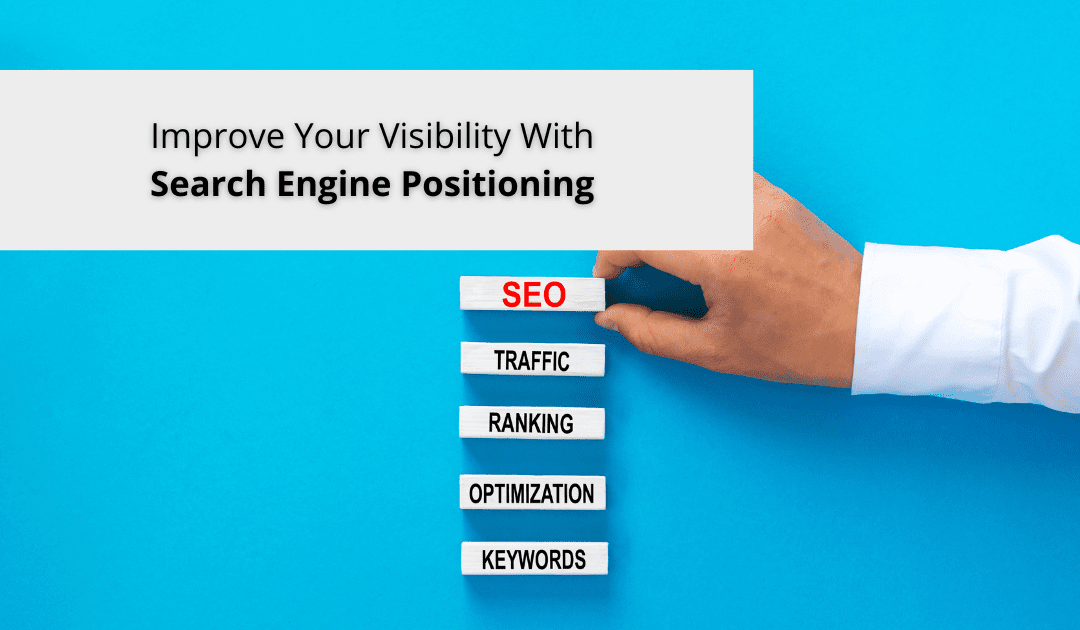
Consumers today search online for nearly every product or service they need, which is why it’s crucial for businesses to continuously work on improving their visibility in the SERPs (search engine results pages).
The higher your website ranks on search engines, the more likely potential customers will find you before they find your competition. But with so many websites competing for the top spots, how do you ensure your business stands out?
One of the most effective ways to improve your visibility is through a strategy known as search engine positioning.
In this article, we’ll explain what search engine positioning is, why it’s important for every business, and actionable steps you can take to boost your site’s position in search results.
What Is Search Engine Positioning?
Search engine positioning refers to the process of optimizing specific pages on your website to achieve higher rankings in search engine results.
Unlike general SEO (search engine optimization), which focuses on optimizing the entire website, search engine positioning hones in on individual pages or a small group of pages.
By targeting these select pages, businesses can achieve quicker results compared to broader SEO strategies.
While SEO focuses on various elements, including site-wide improvements such as mobile-friendliness, page speed, and overall content, search engine positioning is more precise.
It prioritizes a laser-focused approach to getting certain pages to rank higher for specific keywords or search queries. Because the scope is narrower, businesses often see faster improvements in their rankings when they employ search engine positioning.
Why Search Engine Positioning Matters For Your Business

Improving your search engine positioning directly influences your bottom line through increased visibility and organic traffic.
The higher your site ranks, the more likely it is to appear in front of potential customers who are actively searching for the products or services you offer.
Ranking higher on search engines also offers a competitive advantage. Studies show that 75% of users never scroll past the first page of search results, meaning if your business isn’t on the first page, you’re missing out on the majority of traffic.
By improving your search engine positioning, you increase the likelihood that your business will be found above your competitors.
For example, let’s say you own a local plumbing company. If your website ranks higher in search results for keywords like “emergency plumber near me” or “plumbing repair in [city],” you’re more likely to capture customers in urgent need of your services.
This increase in visibility can directly lead to more website visits, calls, leads, and ultimately, conversions. Over time, these conversions translate into greater revenue for your business.
Key Factors That Influence Your Position In the Search Engines

There are several factors that influence where your website ranks in the SERPs. These elements play a significant role in determining how well-positioned your website is on platforms like Google.
Keyword Research
Keyword research is at the heart of any successful search engine positioning strategy. It involves identifying the specific terms and phrases your target audience is searching for and optimizing your content around them.
By targeting the right keywords— those with high relevance and search volume— you increase the chances that your website will rank for those searches.
Content Quality
Search engines prioritize websites that provide valuable, relevant content. Creating high-quality content that answers your audience’s questions and solves their problems can significantly boost your rankings.
The more useful your content, the more likely users will spend time on your site, which sends positive signals to search engines.
Technical SEO
Technical SEO plays a foundational role in search engine positioning. This includes factors like page load speed, mobile optimization, clean coding, and proper indexing of your site.
A fast, mobile-friendly site that’s easy to navigate helps both search engines and users have a positive experience.
User Experience (UX)
Search engines also factor in user experience (UX) when determining rankings. Websites that offer an intuitive, user-friendly experience tend to rank higher because they keep visitors engaged and reduce bounce rates.
Elements like easy navigation, clear calls-to-action (CTAs), and responsive design all contribute to a better user experience.
Strategies For Improving Your Search Engine Positioning

Now that you know what search engine positioning is and why it matters, let’s explore some actionable steps you can take to improve the rankings of your website’s individual pages.
Focus On Specific Pages Of Your Website
Rather than trying to optimize your entire website at once, prioritize the pages that are most important for driving traffic and conversions.
These might include product pages or high-traffic blog posts. By focusing on a smaller set of pages, you can implement changes more quickly and see faster results.
Update Your Existing Content
Outdated content can drag down your search engine positioning. Regularly refreshing your existing pages with updated information, statistics, and new insights can keep your content relevant.
Adding new sections or enhancing the readability of your content will also improve engagement, which in turn helps with rankings.
Improve Your Internal Links
Internal linking is an often overlooked but highly effective strategy. Linking between pages on your website not only helps visitors navigate your site but also spreads ranking power across your site.
When done correctly, internal linking can improve the search engine positioning of multiple pages simultaneously.
Work To Improve Your CTR
Your click-through rate (CTR) is a key metric that search engines use to gauge the relevance of your content. Whenever one of your website pages appears in the SERPs, you want to entice visitors to click on your page and read it.
Improving your title tags, meta descriptions, and calls-to-action can make your site’s pages more appealing, which boosts your CTR and helps you rank higher in search results.
Implement A Backlink Strategy
Backlinks are a powerful way to build authority for your website pages. When other reputable sites link to your content, it signals to search engines that your page is trustworthy and authoritative.
The more high-quality backlinks your page has, the better its positioning.
Acquiring backlinks can be achieved through guest blogging, collaborations with industry influencers, and creating valuable content that others naturally want to link to.
A strong backlink profile improves your authority and search rankings.
Outsource To A Marketing Agency That Specializes In Search Engine Positioning

Improving search engine positioning and keeping up with the latest SEO trends can be both time consuming and challenging for business owners.
That’s where a digital marketing agency like Alchemy can help. At Alchemy, we specialize in all areas of search engine optimization. By outsourcing your SEO needs to experts, you ensure that your strategy is in the hands of professionals who know how to deliver results.
This allows you to focus on running your business while we improve your site’s visibility and rankings. To learn more, call us at 877-978-2110 and speak with one of our marketing experts today.

Trackbacks/Pingbacks