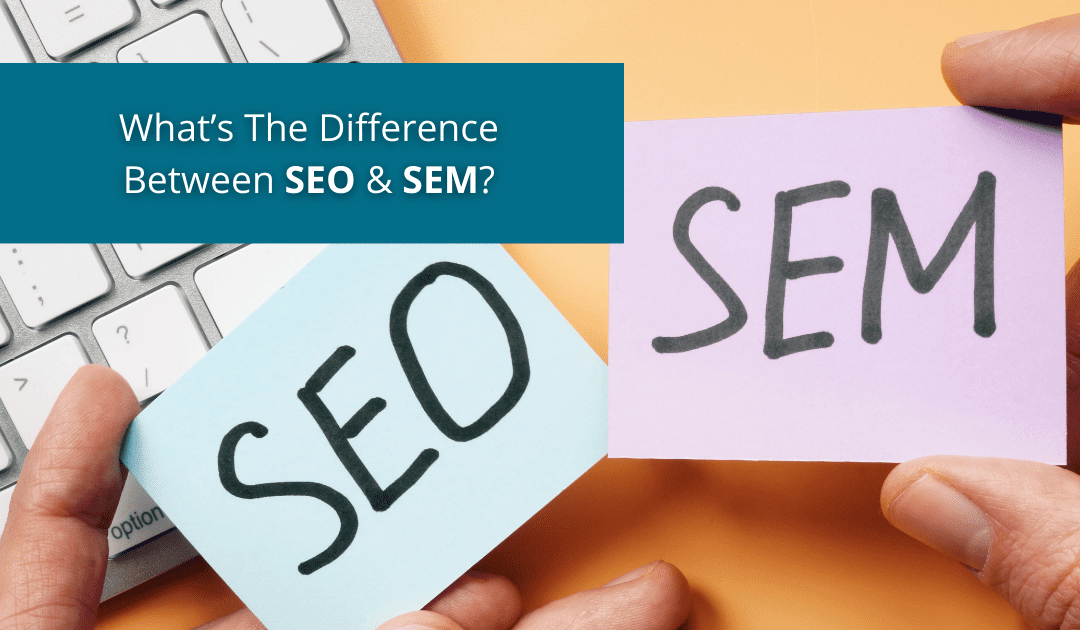
Two of the most talked about methods in the online marketing realm are SEO and SEM. While they sound similar and do indeed work hand in hand, SEO and SEM are different techniques used to enhance website visibility and attract traffic. In this article, we’ll share the fundamental differences between SEO and SEM, as well as explain how each can be effectively utilized to bolster your online presence and achieve your marketing goals.
SEO vs. SEM: What’s The Difference?

Let’s break down what SEO and SEM are and what each marketing strategy focuses on.
What Is SEO?
SEO, or Search Engine Optimization, is a digital marketing strategy focused on improving a website’s visibility in the organic results (non-paid) in the search engines. It involves optimizing various elements of a website to make it more likely to rank higher on search engines like Google, Bing, and Yahoo.
The primary goal of SEO is to increase a website’s relevance and authority in the eyes of search engines, which should lead to higher rankings in search results for specific keywords and phrases relevant to the site’s content and offerings. This, in turn, can drive more organic traffic to the site.
Key aspects of SEO include:
On-Page SEO
This involves optimizing individual web pages to rank higher and earn more relevant traffic. It includes optimizing content, HTML source code, images, and tags (like title tags and meta descriptions).
Off-Page SEO
This focuses on external factors that impact a website’s ranking. It primarily involves building backlinks from other websites, which act as endorsements, increasing the site’s perceived authority and credibility.
Technical SEO
This deals with the technical aspects of a website that affect its rankings, like site speed, mobile-friendliness, indexing, crawlability, site architecture, and security.
Content Optimization
This involves creating high-quality, relevant, and informative content that meets the needs and interests of the target audience. Content should be optimized for both users and search engines.
Keyword Research
This is the process of identifying and targeting specific keywords and phrases that potential customers are searching for online.
Effective SEO requires ongoing effort and adaptation to changing search engine algorithms and user behaviors.
What Is SEM?

SEM, or Search Engine Marketing, is a digital marketing strategy that aims to increase a website’s visibility in search engine results pages (SERPs) through both paid advertising and organic search tactics. SEM is an umbrella term that includes:
SEO (Search Engine Optimization)
SEO is basically a subset of SEM. It’s the organic component of search engine marketing.
Paid Search Advertising
This aspect of SEM involves creating and placing ads in search engine results. Businesses can use platforms like Google Ads and Bing Ads to bid on keywords, and those ads appear above the organic search results.
Pay-Per-Click (PPC)
PPC advertising is where advertisers pay a fee each time their ad is clicked. It’s a direct way to buy visits to your site, complementing the organic traffic earned through SEO.
Google Ads, or Google AdWords, is the most popular PPC advertising system. It enables businesses to create ads that appear on Google’s search engine. Google Ads operates on a pay-per-click model, where users bid on keywords and pay for each click on their advertisements.
When a search is initiated, Google digs into the pool of Ads advertisers and chooses a set of winners to appear in the valuable ad space on its search results page. The winners are chosen based on a combination of factors, including the quality and relevance of their keywords and ad campaigns, as well as the size of their keyword bids. This system allows advertisers to reach potential customers at a cost that fits their budget.
Keyword Research and Targeting
Effective SEM requires thorough keyword research to identify the terms and phrases that potential customers are searching for.
Campaign Management
This involves setting up, monitoring, and optimizing both SEO efforts and paid ad campaigns. It includes managing budgets for paid ads, optimizing website content for SEO, and analyzing the performance of all tactics used.
Analytics and Reporting
SEM relies heavily on data analysis. This includes tracking rankings, traffic, engagement, and conversions from both SEO and paid campaigns to understand overall effectiveness and ROI.
Benefits Of Using SEM And SEO Together
Using paid search advertising and SEO together harnesses the strengths of both strategies to create a more powerful and comprehensive approach to digital marketing. While SEO focuses on optimizing a website to rank higher organically over time, SEM can provide immediate visibility through paid ads. This combination ensures that a business can achieve both short-term and long-term goals.
By using SEO, a business builds a solid foundation with a well-optimized website that attracts organic traffic and establishes credibility and authority in its niche. Meanwhile, SEM strategies like PPC ads can quickly drive targeted traffic and conversions, which is especially useful for new product launches or promotional campaigns.
This dual approach also allows for a more robust data collection and analysis, as insights from both organic and paid search can inform and improve overall marketing strategies. For instance, keyword data from PPC campaigns can be invaluable for SEO, and vice versa.
Furthermore, having a presence in both paid and organic search results can significantly increase brand visibility and trust, as it shows users that the brand has both a reputable standing in its field (as evidenced by SEO) and the confidence to invest in paid advertising (through SEM).
This synergy between SEO and paid advertising not only maximizes the return on investment, but also ensures a more stable and diversified online presence, making a business more resilient to changes in search engine algorithms and online market trends.
Need Help With Your Organic And Paid Marketing Campaigns?

At Alchemy, we specialize in elevating your digital presence through expertly crafted SEO and PPC marketing strategies. With years of experience spanning a diverse range of industries, our team possesses the expertise required to navigate both organic and paid landscapes effectively.
Whether you’re looking to enhance your website’s organic reach or seeking impactful paid advertising campaigns, we’re here to guide you every step of the way. Don’t let the complexities of digital marketing hold you back. Give us a call at 877-978-2110 and let our marketing experts transform your online marketing efforts into successful, measurable results.