When it comes to Digital Marketing, search engine optimization plays a crucial role in determining the success of a website. However, many website owners unknowingly make mistakes that can hinder their efforts to rank higher in the search engine results pages (SERP). These mistakes not only affect the visibility of the website, but also impact its overall performance and reach.
In this article, we’ll share the most common SEO mistakes that you should be mindful of and provide you with actionable tips to help you better navigate the world of search engine optimization.
SEO Issues That Can Hurt Your Rankings In The SERPs
There are a variety of pitfalls that can have a negative impact on your SEO. By being aware of these common SEO mistakes and taking proactive steps to avoid them, you can improve the visibility and reach of your website, ultimately driving more traffic, leads, and sales.
1. Slow Site Speed

Search engines prioritize websites that have fast loading speed. If a site takes too long to load, users are more likely to abandon it quickly, increasing the bounce rate. A high bounce rate signals to search engines that your website may not be providing a satisfactory experience, which can negatively impact your site’s ranking in search results.
The lower engagement levels also suggest to search engines that your content may not be relevant or interesting, which can further degrade your site’s SEO.
You can optimize your website’s loading time by compressing images, minimizing the use of heavy scripts, and utilizing browser caching. Tools like Google’s PageSpeed Insights offer valuable insights and specific actions you can take to boost your site’s speed.
2. Not Having A Google Business Profile
For local businesses, not having a Google Business Profile can result in missed opportunities to appear in local search queries and Google Maps, as well as have a negative impact on your local SEO.
Google uses information from Business Profiles to enhance its understanding of your business, contributing to more accurate and effective indexing of your company’s online presence.
So if you haven’t already done so, set up a Google Business Profile and ensure all the information is accurate and comprehensive, including your business hours, contact information, and services offered. Regularly update the profile with new photos and posts, and respond promptly to reviews to enhance engagement.
3. Bad Reviews

Google considers user reviews as a key ranking factor. Positive reviews signal to Google that your business is trustworthy and offers quality products or services, thereby enhancing your ranking in search results.
Conversely, negative reviews suggest the opposite, potentially leading to a lower ranking. This effect is particularly pronounced in local search results, where Google aims to provide the most reliable and user-approved businesses to its users.
This is why it’s important to always be actively collecting more positive reviews to mitigate the impact of any negative feedback and to improve SEO standings. Encouraging satisfied customers to leave positive reviews not only counterbalances any negative ones, but also continuously reinforces the perception of quality and reliability to potential new customers and to Google’s algorithms.
4. Skipping Keyword Research

Keyword research is crucial for SEO because it identifies the terms and phrases that your target audience uses to search for the products and services you offer. By understanding these keywords, you can optimize your website’s content to align with the most relevant and popular searches.
Without proper keyword research, you risk targeting keywords that are either too competitive, irrelevant, or don’t drive the right kind of traffic to your website.
Utilize keyword research tools like UberSuggest, Google Keyword Planner or SEMrush to identify relevant keywords with high search volume and low competition. Incorporate these keywords naturally into your content, title tags, and meta descriptions.
5. Keyword Stuffing
Keyword stuffing is the practice of overloading a web page with keywords in an attempt to manipulate a site’s ranking in Google search results. This outdated SEO tactic involves unnaturally cramming keywords into text, meta tags, and backlink anchor text.
Overusing keywords disrupts the readability of your content, creating a poor user experience. Search engines like Google can penalize your site for keyword stuffing, leading to lower rankings.
Focus on creating useful, information-rich content that uses keywords appropriately and in context. Aim for a natural flow in your writing, using synonyms and related terms to enhance readability and SEO.
6. Duplicate Content

Duplicate content in SEO refers to content within or across domains that either completely match one other or are very similar. This can occur on different pages of your own website or between your site and another.
Search engines today are smart enough to quickly identify duplicate content and will penalize your website and SEO rankings. This is why it’s very important to ensure all your site’s content is unique.
7. Broken Images And Missing Alternative Texts

Broken images occur when images on your website fail to load, often due to incorrect URLs or removed files, leaving behind a placeholder or error icon. Missing alternative texts (alt texts) refer to the absence of descriptive text in the HTML code for images, which helps screen readers and search engines understand the image content.
Both issues can negatively impact SEO by degrading user experience and accessibility. Broken images can make a site appear unprofessional and poorly maintained, which may increase bounce rates. Missing alt texts reduce the overall accessibility for visually impaired users, factors that search engines consider when ranking sites.
Regularly audit your site for broken images and fix them. Always include descriptive alternative texts for images, as this helps search engines understand the images’ content and context, improving accessibility and relevance in image searches.
8. Outdated Content Or Information On Your Site

Outdated content or incorrect business information on your website can harm your SEO efforts by undermining the trust and credibility of your site.
When users encounter outdated information, whether it’s old contact details or obsolete articles, their satisfaction and engagement decrease, leading to higher bounce rates and fewer interactions.
Regularly review and update your business information and content to ensure it remains accurate, relevant, and informative. This signals to search engines that your website is active and relevant, boosting your SEO.
9. Website Is Not Mobile Optimized

Google prioritizes mobile-friendliness as a ranking factor, particularly after implementing mobile-first indexing which bases rankings on the mobile version of a website.
A mobile-optimized site adjusts seamlessly to smaller screens, loads quickly, and is easy to navigate, which reduces bounce rates and boosts user engagement. These factors not only help in achieving higher search rankings, but also cater to the growing number of users who access the internet via mobile devices, enhancing the reach and effectiveness of your online presence.
Test your website’s mobile usability with tools like Google’s Mobile-Friendly Test and make adjustments as needed.
10. Not Enough Backlinks
Backlinks are links from external websites that lead back to your website. When a website links to your site, it signals to search engines that others find your content valuable and trustworthy. This can significantly enhance your site’s credibility and authority, which are key factors that search engines use to rank websites.
High-quality backlinks, from reputable and relevant sites, can improve your search engine rankings, increase your site’s visibility, and drive more organic traffic. A low number of backlinks can indicate to search engines that your content is not authoritative or valuable.
Focus on creating quality, shareable content that other websites want to link to. Engage in outreach activities, write guest posts on reputable sites, and participate in relevant forums or discussions to gain more backlinks.
11. Lack Of Internal Links
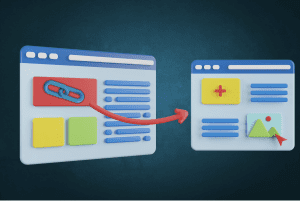
Internal linking refers to the practice of linking from one page to another within the same website. This technique is important for SEO for several reasons.
Internal links enhance user navigation, making it easier for visitors to find relevant content and increasing their time spent on the site. This improved user engagement signals to search engines that your site is providing valuable content, which can boost your rankings.
Internal links also help search engines understand the structure of your website and distribute page authority throughout your site. A lack of internal links can lead to unindexed pages and missed ranking opportunities.
Need Help Optimizing Your Website For SEO?
If you’re finding the complexities of SEO overwhelming or you’re not seeing the results you expect, Alchemy is here to help. We specialize in all aspects of search engine optimization, from keyword research to content strategy and technical SEO.
Our team of experts is dedicated to enhancing your website’s visibility and driving more organic traffic to your site. Don’t let SEO issues hold back your business. Call us today at 877-978-2110 and let us show you how our tailored SEO services can transform your online presence.