

A consistent flow of new prospects is the lifeblood of your business. Whether it is people walking into your shop or office, or finding you online, without this “traffic” your business will not survive for very long. Every time we meet with a business owner, it doesn’t take long for the conversation to turn to the acquisition of new customers.
The Two Primary Ways To Drive Traffic To Your Website: Paid And Organic Traffic

There are two primary Internet based ways to help prospects find your business: organic search and paid traffic. We share ideas on organic SEO (search engine optimization) and how you can begin using this type of marketing to grow your business in this article. But for now, we want to focus on the other channel that can be highly effective for your business: paid traffic.
Paid traffic is a great way to get your business seen by your ideal audience, quickly.
Two Popular Types Of Paid Traffic
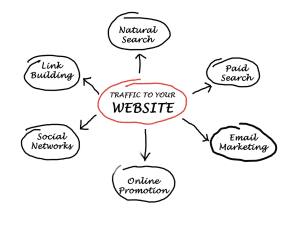
Let’s talk about the two primary methods used to generate paid traffic to your business. They are Google Ads (other search engines also offer paid advertising, but Google controls so much of this market that for simplicity’s sake, we will just refer to this category of advertising as “Google Ads.”). You will often hear people describe this category of advertising as “Pay Per Click” or “PPC” for short.
When you do a Google search almost all the time at the top of the first page of the search results, there will be three or four paid ads. You’ll be able to recognize that the business has paid for these by the designation “Ad” next to the text. As a general rule, any listing you find above the box with the map, is a paid ad.
More recently you will see in some business niches a series of company listings above the paid ads that are “Google Guaranteed” companies. These are listings for companies that have gone through a process of being qualified by Google and that pay a fee for this level of approval from Google.
The other category of paid advertising is Real Time Bidding, more frequently referred to as Banner Advertising. A banner campaign might be “re-targeting” people who have visited your website, or cold marketing banner ads based on demographic or geographic specifications. You can also employ a strategy called “hyper-local” and pinpoint prospects within a very close proximity to your place of business, or even your booth at a trade show. You may have heard the term “geo-fencing” to describe this type of campaign.
For most companies or practices in almost every category the best opportunity you have to quickly attract new prospects is through paid advertising. It is no longer realistic to depend on organic search results, especially for a newer business.
The good news is that paid advertising programs that were financially untenable for a local business just two years ago, can now be implemented with a very affordable monthly investment.
In this article, we’re going to give you an overview of both PPC and Banner Advertising. Our purpose is to introduce you to these channels and give you enough information to ask the right questions as you consider working with someone to help you manage a campaign or design and manage your own.
If you do an Amazon search for books on “PPC”, you’ll find that there are 12 books available with that keyword. And now for the next couple of days, you’ll likely see banner ads offering you these books…because Amazon is a master at Re-Targeting.
You are probably more familiar with Google Ads, so let’s start there.
A PPC advertising program is quite simple to begin. You create an account with the search engines, an “Ads” account as Google names it. Your account is funded with a credit card. Then you place an advertisement that is tied to the keywords that you believe your prospects will search. Every time your ad is clicked, sending a visitor to your website or a landing page, you pay the search engine a small fee.
When PPC is working correctly, the fee is trivial, because the visit is worth more than what you pay for it. In other words, if we pay $36 for a click, but the click results in a $1,000 sale, then you’ve made a hefty profit. Of course not all clicks result in a customer, and not all customers spend the same amount with you.
Knowing the average transaction value and lifetime customer value numbers for your business is critical if you want to have a successful paid advertising campaign. For information on how to properly calculate these numbers, we break it down in our article, 5 Key Performance Indicators Every Business Should Be Tracking.
How is the value of a “click” determined? It’s an open, and very competitive, marketplace. You bid the amount you are willing to spend for a click on a particular keyword. This requires careful research before you launch your campaign. A personal injury attorney in Los Angeles would expect to pay $175 or more for each click on his or her ad. That same ad in another market, Jackson, Mississippi for example, might only cost $27.
There is a common misconception that the ad listed first must be paying more for click traffic than the ads below. This is not true. Ad placement, and your individual cost per click (CPC), are based on your “quality score” as determined by the search engine. More on this later.
The Benefits Of Paid Traffic: Why You Should Consider Adding It To Your Digital Marketing Efforts

First, why would a business owner invest in paid advertising, particularly in a wide open and potentially expensive marketplace like Ads? There are quite a few good reasons. Consider these:
Generate new leads: Use PPC to obtain new prospects and gather information about their needs over time. You can drive new prospects to a special landing page where they can sign up for a free demo or download a new report or free content.
Direct Sales: Drive new leads to a transaction or sales page
Build Brand Awareness: Use PPC to invite prospects to an event, either on or offline, or to promote something newsworthy.
Pay For Performance: You only pay for actual clicks to your listing. If a user enters a search term, sees your site and clicks the listing, it is because s/he believes your listing will provide the info s/he wants.
Control what visitors see on your site; focus the conversation. You can direct traffic to specific pages on your site. You should develop landing pages for each campaign, pages offering specific information, and a strong call to action. These are separate from your primary website.
Excellent Timing: You bid on the search terms/keywords used by your prospects when they are searching for info about what you offer on the web.
Bid What A Prospect Is Worth: You can input different bid amounts on keywords to reflect how valuable the leads are for you. For example, you may bid on a very specific phrase such as, “Roofing Contractor, Portland,” and pay more for those clicks because they are more valuable to you than general keywords that may drive a greater volume of less targeted traffic.
Limit Your Spending: You can choose a maximum bid level for each click, as well as a total spend you are willing to make each day. This way you only spend what those website visits are worth to you.
Speed to market: You can launch a paid search campaign as soon as your website is live, building immediate traffic that may take months to generate organically.
Develop Targeted Campaigns: You can develop very specific campaigns that include seasonality, regionality, and other factors that influence the purchasing decision.
Who Is Google’s Customer?

Another important question to consider when building a paid ad campaign is, “who is Google’s customer?”. At first glance you might assume it is the company that is buying advertising, since that is Google’s primary source of revenue. That would be wrong.
Google considers their customer to be the person entering the search term into their browser and trying to find information. Even if you’re spending $100K a month on Ads, and many companies do, that still doesn’t make that business more important than the searcher.
Knowing that, how does it impact the way you structure your ad campaigns? You want to make it easy for the searcher to find exactly what they’re looking for (what they ‘clicked’ for) when they choose your ad. Frequently this means taking them to a landing page that is focused on the exact topic that your ad is.
Here’s an example:
Let’s say you’re a plumbing contractor that offers 24-hour emergency service. One of your trucks is on call every night, and you have a special phone number that goes to a mobile phone for whomever is on call that night. Mrs. Smith has a plumbing emergency at 2 am, so goes online to find an emergency plumber. She sees your paid ad, “24-Hour Emergency Plumber” at the top of the page and clicks on it. She then finds herself on the homepage of your website. There she can learn that you’ve been in business for 27 years, have a friendly staff, and see a picture of one of your trucks. However, there is nothing about how to contact the 24-hour emergency service.
Within seconds Mrs. Smith clicks off your site and goes to the next paid ad offering emergency service. When she clicks on it, she is taken to a landing page that has, in large bold type, “24-HOUR EMERGENCIES, CALL 555-555-1212″. That number might even be set as a “click to call” number so if she is on her mobile phone, she can just touch it and immediately dial your number. Having found her answer, Mrs. Smith makes the call and stops searching.
Think about how Google views that transaction. They track the keywords Mrs. Smith entered, and offer her a page that is most congruent with those search terms. Then the Google bot records the fact that Mrs. Smith clicked on your ad, but within seconds left and came back to her search. That tells Google she did not find what she wanted on your site…bad for you! On her next search she not only stayed longer on the page she selected, but stopped searching after that page…good for your competitor!
There are a couple of lessons to take from this simple example. First, Mrs. Smith finding what she needs, and quickly, is Google’s top priority. Second, if your ad is for a specific product or service, make sure that when a prospect clicks on the ad they can find information on that specific product or service right away. People are impatient. If they have to look for something, they won’t. If the Internet has subconsciously trained us about anything, it is that we can always find what we want if we keep clicking.
Optimize Your Paid Traffic Campaigns By Improving Your Your Quality Score

The other fact that is buried in this example, that will cost or make you money, is the concept of your Quality Score with Google. The placement of your ad on the page for each keyword that you are targeting is determined by your Quality Score. This score is determined by the search engines using a complicated algorithm that is frequently updated and considered a ‘trade secret’.
However, as Google Certified ad managers we know most of the basics. In brief, here’s how the formula works:
Where your ad appears on the page (your “ad rank”) is determined by your maximum bid amount for that keyword times your Quality Score. The cost of your ad, if it is selected by the searcher, is calculated as: The Ad Rank of the advertisement below you divided by your Quality Score, plus a penny.
That’s probably more than you wanted to know. The more important question is, “how can I influence and improve my Quality Score?”. Ahh, if only it were that simple!
Google actually has seven different types of quality scores: account level, ad group, keyword level, ad level, landing page, display network, and mobile. These seven categories comprise the different components that go into building a properly designed and managed Ads campaign.
If you want to implement PPC advertising for your company, there are quite a few online sources you can get guides to help with this. All of these will discuss the importance of quality score and how to enhance it. We dive deeper into each of the seven types of quality scores and how to improve them in this article.
Building A Good PPC Ad To Get More Traffic And Conversions
That being said, we would be remiss if we didn’t offer you some tips on designing a proper ad. Tips that will give you the best opportunity to attract clicks while enhancing your quality score.
Here are five important considerations when it comes to developing a successful PPC ad:
Competitive Research. What do other companies in your business niche say in their ads? Take some time and do this exercise:
Identify the top ten keywords you’d like to rank for and type each of them into the browser. Then take a screenshot of the paid ads and print them out so you can more easily study them.
What is the headline of the ad? Many times a company will just use their name. This is a mistake. Unless the company has spent a lot of money and time with radio or television advertising, the average consumer will probably not recognize their company name. It is not uncommon to include terms like, “best plumber in town” or something equally trite. Searchers do not believe these meaningless platitudes, don’t use them!
To be effective you want your ad to have a powerful headline. We worked with a roofing company several years ago that used the slogan, “think you need a new roof—think again”. We tested that in several PPC campaigns with great success. The point is, be different and you will get more clicks.
Identify Differentiating Characteristics. Now that you’ve assessed the competition, use your knowledge to become the leader of the pack. Consider your page-mates ad copy and identify a differentiator that will make you stand out. This is your opportunity to sell yourself! Tell the searcher why you are providing them a better product or deal than your competitors.
Maybe it’s your years in the marketplace, or top ranking from the BBB, or your company was selected for an industry award. Anything that might attract attention and prompt a searcher to read your ad.
Include A Call to Action. To complete your ad, include a call to action that gives your searchers an incentive to click. You can opt for the standard “call us now”, but if you really want to step it up a notch, consider a more creative alternative.
If you have a high profile past client (and get their permission) say something like “Coach Smith trusted his home air conditioner to us, you should too”. Make an offer that gives something of value to a homeowner: “Free evaluation of your case” as an example for a law office.
Use Ad Extensions. Extensions are a way to increase the size of your ad at no additional cost. There are several types of extensions you can utilize. Among them are call extensions, sitelink extensions, location extensions, offer extensions, and application extensions (for people using a tablet or mobile phone to search).
Watch Your Metrics. Your ad may be complete, but you’re not finished yet. Let it get a few impressions and then assess your success!
It’s tough to predict the performance of a new ad, so ad copy testing is critical. Often the ad copy you thought would win out ends up losing. There’s no way to know what will work until you test ads against each other and let prospects inform your decision.
Why Do I Need Landing Pages?
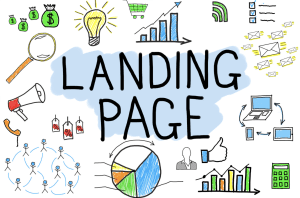
The classic mistake that too many business owners make when starting a new PPC campaign is sending someone who clicks on their ad directly to their website, usually to the home page. “What’s wrong with that,” you’re asking? While you may have an award-winning homepage that was designed by a well-known internet guru who charged you a lot of money, it may not be at all relevant to the reason someone is searching for you.
Your PPC ad is written for a specific response. It is crafted to speak to a specific need in mind of the searcher. Your website is a more general introduction to your company and all its products and services. It may not immediately speak to the need in the mind of the prospect. A landing page is a “single page website” that does.
Why does someone need what you offer? What, specifically, are they looking for when they go to a search engine and type in their keywords? That is the question you want to answer for them immediately when they click on your ad.
The way you do this is with a Landing Page. A Landing Page is just what it sounds like, an online page that specifically addresses the exact question the searcher is asking. Remember the 24-hour emergency plumbing example we gave earlier? It was the landing page that provided the immediate answer to Mrs. Smith’s concern that won the business.
We call this strategy “One Decision Marketing” because it is focused on helping a prospect make the one decision that is most relevant to them at that time. This will also augment your quality score as Google sees searchers finding what they want when clicking your ads.
When we explain this to prospects and clients a common question is, “does that mean I need a landing page for each ad I run?”. No, not each individual ad, but a landing page for each product or service you are marketing.
You may have several ads. Each ad has specific keywords and therefore a specific want or need that it is addressing, but are all focused on bringing prospects to a particular product or service. These ads should all be directed to a specific landing page so that a prospective customer has their immediate questions answered.
Let us offer a different example to be sure we’re clear on this important point. As a plastic surgeon, you offer a variety of procedures. Tummy tuck, facelift, breast augmentation, mommy makeover, botox injections, etc. Each of these areas of specialization might have three or five or even more keyword phrases that are commonly typed in by searchers.
Each of those keyword phrases can have one or more specific ads (“more” because you are constantly testing to improve your results). All of the ads for ‘tummy tuck’ will link to one landing page that has relevant information to that specific specialty of your practice, and a clear call to action so the searcher knows exactly what you want them to do next. All of the facelift ads will link to a landing page that only talks about that service.
Does It Make Sense To Outsource PPC Campaigns?
Managing a PPC program with multiple campaigns and ad groups takes both time and expertise. It is a specialized enough task that many business owners choose to outsource their Pay Per Click marketing. If that is something you want to explore, then let us give you some tips for finding the right company.
1. Make certain that the firm you retain is actually doing the work. Frequently larger ad agencies will sub-contract paid ad campaigns to someone else and mark up the cost. Another technique is agencies will “macro-manage” campaigns. What that means is they group together like companies, all dentists or all HVAC contractors for example, and make generic updates to ads for the group rather than analyzing the specific results for your company.
2. Get monthly reports that you can understand. At a minimum you should receive updates on cost, number of impressions, cost per click, click through rate, cost per conversion, and conversion rate. If you are including Click-to-Call ads, then a summary of the number of calls and how long they lasted should be analyzed as well.
3. Before accepting you as a client, a good ad manager will ask you specific questions about your ideal prospect: what is your company value proposition, what times of the day/month/year are you the most busy, what is the transaction value of a new customer, lifetime value of that customer, what are you willing to pay to acquire a new customer?
4. The ad manager should also help you analyze what is a realistic marketing budget to meet your goals?
We said earlier that PPC advertising can be an extremely powerful and cost-effective traffic source if managed correctly. Like so many things in our businesses, it is that “managed correctly” that is the difference between success and failure.
We want to switch our focus to the other category of creating traffic for your business: Banner advertising. We’re excited to share this with you because it is a strategy that has only recently become affordable for a local business. It is still largely unknown, which means that the business owner who implements now, will have a significant advantage over the competition.
Banner Advertising For Consistent Website Traffic
Have you ever shopped on Amazon? Or more recently eBay? Even if you didn’t buy anything, you’ve experienced one category of Banner Advertising: Re-targeting. That is the strategy of identifying the item(s) you looked at and then showing you ads for those items as you continue to explore other sites online. Many large companies, especially online retailers, now incorporate re-targeting as a primary marketing channel.
Until recently this type of advertising was not accessible to local businesses. Part of that was the cost of producing and distributing advertisements. More important was the fact that the technology had not yet been developed to the point where a specific market niche and local business market area could be pinpointed with accuracy.
That has all changed! A local spa can now offer services on the Home and Garden channel. Want to see your roofing business on the ESPN website…no problem. Do many of your customers frequent weather.com? Why not invite them to your business by publishing your ads on weather.com?
There are several categories of banner advertising available to your business, but before we describe them, we want to take just a minute and talk about the technology that makes all of this possible. The analogy that we’ll use is the stock market and the New York Stock Exchange.
If you own a business and want to “go public” you can’t just print off a bunch of stock certificates, run an ad in USA Today, and start selling shares. (Well, you probably could, but it wouldn’t take long for an attorney from the SEC to contact you.)
To take your company public requires that you prepare an Initial Public Offering document and have brokers who are willing to represent your company to their customers and “market” your business to prospective investors. Then your shares have to be accepted for trade by an “exchange”. The one most of us are familiar with is the New York Stock Exchange, but there are other exchanges that process trades with smaller capitalization stocks.
When someone wants to buy your stock they contact a broker who consults the exchange to see what the current market price of your stock is, and if there are any available shares to purchase. If you own the stock and want to sell some shares you do the same thing, contact a broker who will make your shares available to the exchange. The price of the stock fluctuates based on supply and demand.
All those ads from Amazon and the multitude of companies who purchase ad space online get to your computer screen or mobile phone in much the same way. There are several primary “ad exchanges” that function just like the stock exchanges.
Companies who want to “monetize” their websites offer to sell ad space on the site. They join one or more of the exchanges and make their “ad space inventory” available. Companies who want to advertise create a set of banner ads and submit them to the ad exchanges for approval. Once approved, your ads go into the ad inventory and are placed on websites in a competitive bidding process that is almost like an auction.
Here’s an example. You own a heating and air conditioning company in Oklahoma City, but you also serve several communities in the OKC metro area. You want to begin buying online ad inventory in one category, re-targeting. You contact an agency that is approved to sell to the ad exchanges who designs several sets of ads for you and submits them to the exchanges. A day or so later your ads are approved. Now here’s where the magic starts.
Your agency has done a proper analysis of the competition in your market area and identified the specific zip codes that you want to have ads displayed in (this is a ‘geographic’ campaign). They have also created a “re-targeting pixel” and added it to your website. This is a snippet of computer code, html code to be exact, that is placed just before the closing <Head>/ tag in the header of your website’s home page. Everyone who visits your website will then be “pixeled” with this code.
As the visitor leaves your website and goes to another, the ad exchanges will determine if they are within the geographical area that you’ve set for your campaigns. Then they look at the website your visitor is now on to see if it is a site that accepts ads. If it is, then they look at the available ad size configurations available on that site.
The next step is to analyze all of the companies that are competing for that ad space regardless of type of campaign. They then evaluate the dollar amount of the “bid” for ad space made by each of these companies and determine a winner. That company’s ad is then displayed in front of the visitor. As the visitor to your site continues to search around the web this process is repeated for every website they visit.
What is amazing about this process is that everything we just described happens in roughly 40 milli-seconds—less than the time it takes to load the website onto the visitors’ screen!
One of the reasons this marketing channel was only available to larger companies was the limitation on available bandwidth and Internet speed. That is no longer the case, and as with any “open market” now that there is an increased supply of ad inventory more participating companies are needed to buy it up.
The opportunity for a small business today is the reality that the majority of business owners don’t yet know about this, and just a small percentage of advertising and marketing agencies have the technology platforms to offer it. That heating contractor in Oklahoma City we used as an example earlier, can grab a significant market share just by being an early adopter of this technology!
Here’s a couple of take-aways from what we’ve said so far about banner advertising:
1. This is a new opportunity. We like to think of it as Google in 2006, a wide-open playing field where the first businesses to take advantage of the technology will prosper.
2. The exchanges are not available to a business owner to work with directly. (The lone exception is the Google Ad Exchange which can be accessed much like their Ads platform that we described earlier.)
However, as ubiquitous as Google is in the search world, their ad platform is a small player. You must have an agency that is registered with at least one of the exchanges to ‘represent’ you and get your ads considered. You want an agency that participates in as many agencies as possible, so you have more opportunities for ad placement.
3. Developing the “creatives,” that is, the display ads, isn’t as easy as having your graphics person put an ad together. First, the available ad inventory on all websites must conform to one of 16 different sizes. Many sites will accept ads of different sizes on the same page.
The placement on the page factors into the cost of the ad as well. Prime exposure near the top of the page is more expensive than a smaller ad on the sidebar, for example. When you submit a set of ads for approval that set must include all 16 of the standard sizes.
4. To further complicate things, all ads must feature either the advertising company’s logo or phone number. Images must be “compliant” with the ad exchange guidelines (which means generic images that are not likely to offend anyone). Images must be 150 kb or smaller so that they load quickly.
5. A recent update, again based on the increased speed of the internet, are animated ads and video ads. Animated ads are not like cartoons, but ads with one component of the ad that changes as it is displayed.
A call to action button that switches between yellow and brown and then back to yellow for example. Video ads can only be displayed on a limited number of sites at this time, which means they are more expensive to include in a campaign.
Categories Of Banner Advertising

The most obvious, re-targeting, we’ve already described. Someone visits your website, a pixel is “dropped” onto their device, and your ads are shown to them for a period of time (set by you and your agency).
The other primary category of Banner advertising is Cold Market ad placement. These campaigns are designed to attract the attention of someone who has not yet been to your website and invite them to visit. Here your agency creates sets of ads and submits them to the exchanges.
Once approved, they are placed based on your specifications for the campaign. These can be:
1. Geographic. Usually designated by zip code, your ads will only be shown to people who live within the specific zip codes. Almost any business or professional practice can benefit from geographic targeting of the area around their business location, or a specific neighborhood they’d like to expand into. We have found this to be especially effective for home improvement contractors who target neighborhoods.
2. Demographic. If you want to make your business known to people who are interested in gardening, that can be done. Or homeowners with children still at home who have a family income over $75,000…easy. What about people who like classic cars? No problem. We hope you’re seeing that if you have carefully identified one or more ideal customers for your product or service, it is very likely that a highly focused campaign that only targets those people can be developed. Of course you can combine geographic criteria with demographic.
3. Specific sites. What if you just want your ads displayed on a few specific websites? Like the local network affiliates, ESPN, Zillow, etc. A campaign just offering your ads to those sites can be designed.
4. Hyper-local campaigns. This is where you identify a specific address and small area around it for your ads to be presented.
For example, you sell products to dentists. There is a dental convention coming up next month in St. Louis at the convention center. We would design banners inviting convention attendees to your booth or presentation, or just exposing your products if you don’t have a booth.
We take the address of the convention center and say a radius around it of 1500 feet (to get the convention hotels that the dentists are likely to be staying at). Your ads start running the day before the convention through one day after it is over. This highly targeted style of campaign will only display on mobile devices, but that’s OK because your potential customers are moving around the convention center and using their phones to stay in touch.
5. There is one more option that is available after several months of campaigns. We use software to manage banner ad campaigns that track every website where a prospect clicked on the ad. Over time we find the top dozen or so sites that seem to have the most potential customers for our client. We then create new campaigns and target just those sites.
Sounds Complicated…Are Banner Ads Expensive?

We’ve saved the best for last. If you have any experience with PPC or Facebook advertising you know how quickly you can go through money. Depending on the niche your business is in, an ad budget of $3000 may not be enough to stay competitive.
Banner advertising is priced differently. Rather than a cost per click, you pay a fee for each 1000 impressions. Since this is still a fairly new marketplace, we tell our customers to plan on about $35 ad spend per thousand impressions. There are exceptions of course. If animated ads are included in your campaigns the cost will be more. Video ads, because of supply and demand, are currently running $100 per thousand impressions. We have seen these budget amounts increase over the last twelve months as more and more companies come into the market, so expect to see that trend continue.
Fortunately, there are specific controls you can implement to “throttle” the ad spend. We’ve already discussed limiting the geographical reach of your ads. You can also specify how many times in a day one person sees your ad, and/or the times during the day that your ad is shown.
Another consideration that is important to factor into your thinking is the reality of “banner blindness”. This describes the fact that after someone sees your ad a couple of times, they don’t see it again. Or at least they won’t focus on it. That is why it is important that your agency develops multiple sets of ads and rotates them frequently.
Let us elaborate on this point. How many ad sets do you need? How frequently should they be changed? The more important question is, “how long does the typical prospect take to make a decision about what you sell?”. If it is a relatively short time, then you don’t need more than a couple of ad sets. Longer, you’ll need more.
Here’s how our agency answers that question. If your buyer typically spends 14 days or less making a decision, we prepare five distinct sets of ads. At least one of these will feature one of your five-star reviews, another with an offer of some kind, and the remaining three are more “branding” ads designed to keep your company name in front of the prospect. This means we rotate a new ad set into place every two days for the first six days, give the remaining two sets three days “online”, and then run the first set again for the last two days.
Between 14- and 30-day decision making time we create ten sets of ads, just double the number of each ad type. These we run for three days each. Some clients have prospects who take longer to make a decision, a plastic surgeon client comes to mind. We run their ten ad sets for the thirty days, during which time we’re monitoring the traffic that each ad set generates. At the end of the month we replace the lowest five sets with new ones and continue until the prospect makes a decision.
What should a local business expect to budget for a complete campaign? By complete campaign I mean analysis of your business niche and geographical location, development of multiple ad sets, design of the campaign specifics and daily monitoring of results, A/B split testing of ads, and monthly reporting to you.
The starting point is going to be $750 for a retargeting campaign including the ad spend. For more diversified campaigns that include retargeting as well as other cold market campaigns the monthly cost will range up to $2000, again including the ad spend. Of course these estimates will change as the market evolves.
What Results Should You Expect From Banner Advertising?

Our agency started with banner advertising in 2014. At that time it was called RTB (Real Time Bidding) and we could only offer it to regional clients who served a larger geographical footprint because it wasn’t possible to narrow it down. There were fewer websites that accepted advertising, so the costs were significantly higher. Our campaigns at that time started at $4500 for just retargeting.
What a better marketplace we have today! We have often stated that “retargeting is the only marketing strategy that makes all of your other marketing more effective!”. It should be obvious that we’re bullish on retargeting and banner advertising as a strategy for just about any business or professional practice.
That being said, how can a business owner measure the value, the ROI, of banner campaign advertising? Here are some considerations:
- Increased brand exposure
- More clicks, because you have many more ads in more places
- Direct hits onto your domain
- Increased landing page effectiveness (with more hits)
- Branded search increases (searches that include all/part of company name)
- Domain.com searches (powerful for SEO)
- Overall increase in calls, visits, emails, chats.
All of which means: more sales!
Many marketing channels are great for building your brand (radio, TV, your website, billboards, citation and directory sites, your online reputation, etc). Others are good for creating sales (PPC, direct mail, email blasts, print ads, etc). Only retargeting and banner advertising do both. Our encouragement to you as a business owner is that you prioritize learning more about this marketing channel and consider adding it to your business growth strategy.
Digital Marketing Agency That Specializes In Paid Traffic Campaigns
When it comes to generating high-quality traffic that converts, it’s clear that paid traffic campaigns are one of the best ways to achieve success. Alchemy Consulting is your go-to expert in paid traffic strategies. Our marketing team offers years of expertise in various digital marketing channels, but especially so in utilizing platforms like Google and social media ads to drive targeted, paid traffic for your website.
If you think you’re ready to take advantage of the benefits of paid traffic and start seeing results quickly– contact us at Alchemy by calling 877-978-2110. We’re happy to discuss how we can make paid traffic work for you, and convert more website visitors into customers.
Trackbacks/Pingbacks