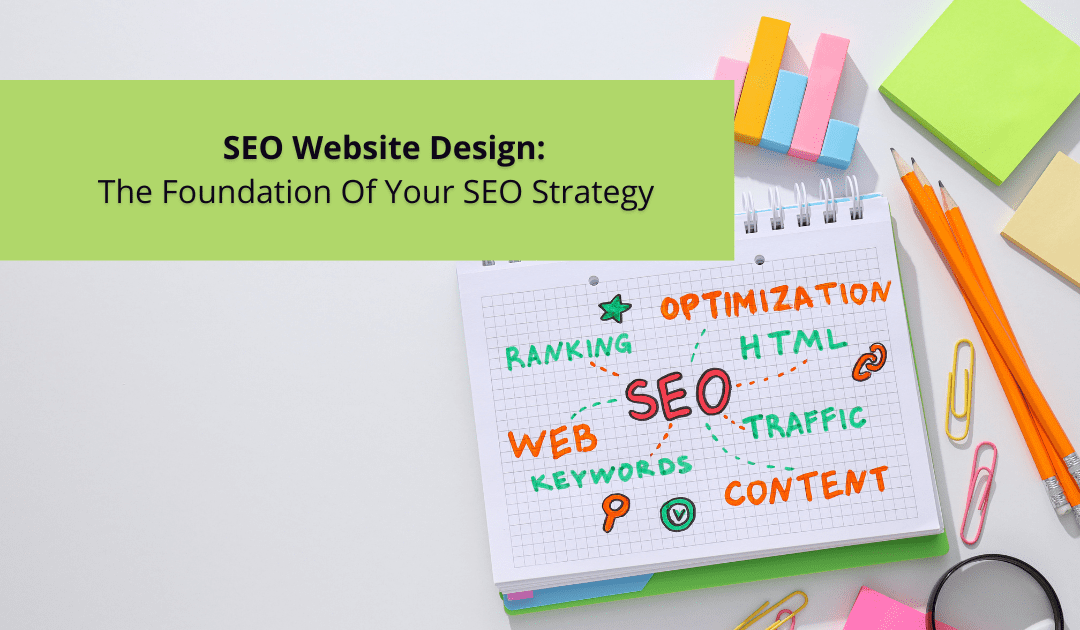
When it comes to growing your business online, having a visually appealing website is only half the battle. The other half? Ensuring that your website is strategically designed to get found on search engines such as Google, Bing, and Yahoo.
A critical component for businesses looking to increase website visibility, attract qualified leads, and ultimately convert users into customers, is SEO website design. In this article, we’re exploring what SEO website design really entails, its various components, and why every business owner needs to make it a foundational part of their SEO strategy.
What Is SEO Website Design?

In its simplest form, SEO website design is the practice of designing and developing websites that are optimized for search engines. Search engines “crawl” your site to understand its structure, identify its content, and evaluate its relevance based on users’ search queries. If your website isn’t designed with SEO in mind, search engines may struggle to index its pages, causing you to miss valuable opportunities to rank in search results.
Unlike traditional web design, SEO website design focuses heavily on elements that contribute to a site’s ranking potential. These elements include the proper use of headings, URL formatting, internal link structure, mobile responsiveness, load speed, and security. Each of these ensures that both users and search engines can seamlessly navigate your website.
Search engines rank websites by measuring three primary factors: content quality, relevance, and domain authority. However, none of these can shine without a well-structured, SEO-friendly design guiding the way. Building this foundation ensures search engines understand your site’s purpose and users enjoy an intuitive experience.
Think of your website as the foundation of your SEO strategy. Without the right structure, all other SEO efforts, from keyword optimization to link building, risk being inefficient.
The Core Components Of SEO-Friendly Web Design
Designing an SEO-friendly website involves several moving parts, each of which contributes to its performance. Below are the essential components that every SEO-conscious business owner should prioritize:
Domain Name Matters
Your domain name is often the first impression for both search engines and users. It should clearly convey what your business is about while remaining short, memorable, and relevant. Search engines treat a well-named domain as a signal of credibility and authority in your field. Changing your domain after launching a site can negatively affect rankings, so it’s crucial to make the right choice at the beginning.
Hosting Strategy And Site Security
A fast-loading, secure site is non-negotiable in today’s SEO landscape. Search engines favor websites that are hosted on secure (HTTPS) platforms, as this ensures user data is protected. Insecure (HTTP) websites may discourage site visitors and cause search engines to rank competitors with higher security measures above you.
Additionally, your hosting provider plays a critical role in your site’s speed performance. A slow website can frustrate users, leading to higher bounce rates—which is a negative ranking signal for search engines. To improve your website’s performance, invest in a reputable hosting provider that offers fast servers and secure encryption.
Content Management System (CMS) Optimization
The content management system (CMS) you choose plays a pivotal role in your SEO website design. A good CMS, like WordPress, allows for easy updates to web pages, blog posts, and metadata without requiring technical expertise. It should also be compatible with SEO plugins and tools that assist with keyword optimization, link building, and analytics integration.
Mobile-Friendliness And Responsiveness
Google’s algorithms prioritize mobile-first indexing, meaning they evaluate your website’s mobile version before the desktop version. If your site isn’t mobile-friendly or responsive, you risk being penalized in rankings. A responsive design ensures that your site looks great and functions seamlessly across all devices, whether it’s a desktop, tablet, or smartphone.
URL Structure And Keyword Optimization
Your website’s URL structure sends critical signals to search engines about its content. URLs should be simple, user-friendly, and contain relevant keywords. Using meaningful slugs in conjunction with strategic keywords can help users and search engines better understand each page’s purpose while improving rankings.
Link Structure And Internal Navigation
Strategic internal linking is essential for SEO website design. Internal links help search engines and visitors move through your website, identify key pages, and understand your site’s hierarchy. By linking effectively, you distribute “link equity,” or ranking power, across your site, ensuring every page has a better chance of ranking.
A well-thought-out link structure resembles a pyramid, with your homepage at the top and subsequent pages branching down into categories and subcategories. This organization helps search engines better understand relationships between pages, boosting your overall SEO.
Page Load Speed
Page load speed directly affects user experience and bounce rates. The faster your pages load, the more likely visitors are to stay and engage on your website. Google also uses load speed as a ranking factor, making it a key performance metric. Implementing measures such as image compression, browser caching, and reducing server response times can improve this aspect of your SEO website design.
Schema Markup And Metadata
Schema markup provides additional context about your website’s content to search engines. It can improve your chances of appearing in rich search results, such as snippets or product listings. Similarly, your title tags, meta descriptions, and header tags play a role in helping search engines and users understand your web pages.
Why SEO-Friendly Website Design Is Essential For Your Overall Search Engine Optimization Strategy

SEO website design lays the groundwork for all other aspects of SEO. Without this foundation, even the most well-optimized content may struggle to perform. Consider it the infrastructure for your digital marketing efforts: you wouldn’t build a house on an unstable foundation, and the same logic applies to your website.
Today’s digital landscape revolves around search engines. Research shows that around 93% of internet users begin their online experiences with a search query, and 76% of website traffic stems from those searches. Users are actively seeking businesses like yours, but if your website isn’t optimized for SEO, they won’t be able to find you.
By making sure your site is easily crawlable and user-friendly, you not only improve your chances of ranking higher in search engines but also create a positive user experience that builds trust and credibility. SEO website design allows you to compete effectively against other businesses in your niche and ensures your content delivers value to the right audience.
How SEO Website Design Builds Domain Authority
Domain authority is a measure of how trustworthy and relevant your site is in your industry. When your website has clear navigation, intuitive functionality, and SEO-friendly features, search engines and users alike are more likely to consider it credible. Over time, this credibility helps you earn backlinks, improve social shares, and increase engagement—key components of establishing strong domain authority.
Contact Alchemy For SEO Web Design Services

While it’s clear that SEO website design is crucial for gaining visibility online, it’s no small task to implement. As a business owner, you likely have limited time to dedicate to learning SEO and perfecting the technical aspects of your website.
At Alchemy, our team specializes in SEO and website design. From optimizing your site’s technical structure to creating a comprehensive SEO strategy, we take the complexity out of SEO to let you focus on running your business.
If you’re ready to take your online presence to the next level, call us today at 877-978-2110 to discuss how we can build a strong SEO foundation for your business. Together, we’ll ensure your website not only looks great but performs even better in search results.